
My Hindu Friend
A few years ago, I was doing my best to explain the origin of The Book of Mormon to a Hindu friend of mine. At the time, I was an active member of the LDS church, so naturally I saw the situation as a potential missionary opportunity.
I told her the book was actually a historical record of the people in the ancient Americas written hundreds of years ago on gold plates. I told her that the main event recorded in The Book of Mormon was about Jesus Christ appearing to the people after his resurrection. I told her that this golden record was buried for hundreds of years and then discovered by Joseph Smith who was led by an angel in the 1820s. I told her that through the power of God, Joseph Smith translated the book from an ancient language into English.
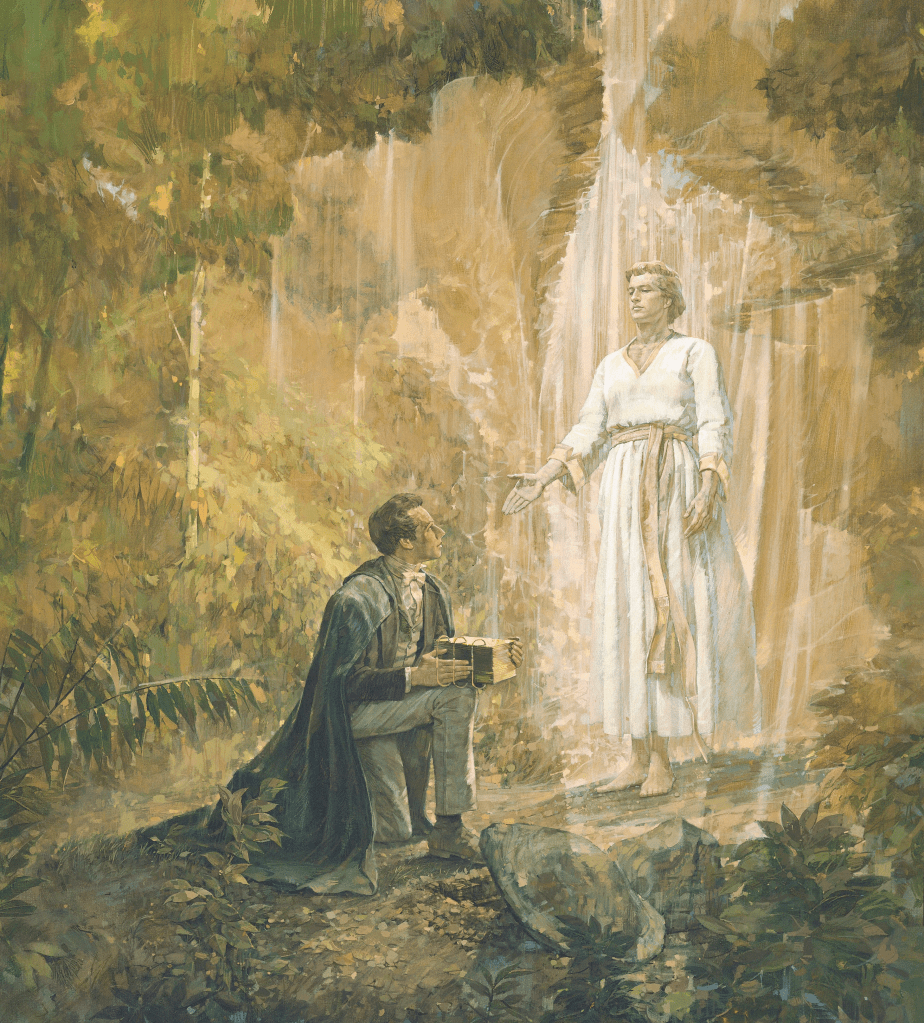
As I explained The Book of Mormon to my friend she nodded along and thoughtfully listened — maybe even feeling the Spirit of God confirming the truth of my words to her 🤞🥹🤩! I was excited.
She thanked me for my explanation. Then, it was her turn to share.
She explained that in her religious tradition they had similar “stories about God”. She told me brief stories about Krishna, Rama, Shiva, etc.

Honestly, I was a little disappointed. She was trying to relate to my Mormon experience with her Hindu experience, but in my mind, these were VERY different. I was describing actual history to her, and she was comparing my stories to Hindu bedtime stories! I felt misunderstood 😔.
In retrospect, and with time, however, I think she had a good point. The story about Joseph Smith and the stories about Krishna or other Hindu figures have many things in common, including spectacular truth claims, a special connection to the divine, and unexplainable events. It’s also worth noting that allegedly both Joseph Smith and Krishna practiced polygamy 🫣.
What If
What if…
- Jesus Christ was born from a virgin named Mary and was later killed and resurrected from the dead? (Christian)
- Joseph Smith saw God the Father and Jesus Christ who called him to become a modern-day prophet in the year 1820? (LDS)
- Jesus Christ invisibly returned to Earth to begin his heavenly reign, marking the start of the end times in 1914? (JW)
- Wovoka (Jack Wilson), the Paiute prophet, experienced a vision of the Great Spirit during a solar eclipse in 1889? (Native American)
- The Bab survived by a miracle from a shooting squad of 750 people in the year 1850? (Baha’i)
- Muhammad received the first verses of the Quran from the archangel Gabriel in the year 610? (Muslim)
- The Guru Granth Sahib, the book of scriptures revered by Sikhs, became a living guru in the year 1708? (Sikh)
- Siddhartha Gautama attained enlightenment under the Bodhi tree and became the Buddah around the year ~500 BC? (Buddhist)
- Zoroaster encountered Ahura Mazda (God) in a divine vision and received the core teachings of Zoroastrianism around the year ~1000 BC?
- Moses received the Torah from God on Mount Sinai around the year ~1200 BC? (Judaism)
- Krishna revealed the entire universe inside his mouth to his mother, as proof of his divine nature around the year ~3000 BC? (Hindu)
What if none of these stories actually happened? Is that possible?
Yes, and modern-day science would agree with you.
What if all of these stories actually happened? Is that possible?
Yes, and religious traditions around the world would agree with you (at least about their own stories).
What if my religion’s story actually happened but others’ stories did not? Is that possible?
Yes, but unlikely. If you’re willing to accept one of these stories after careful research, pondering, and praying, then ideally you would investigate the rest too.
Maybe we take things too literally sometimes. Maybe these stories are more spiritual/mystical in nature. Maybe my friend is right. Maybe they really are “stories about God”.
Stories About God
Let’s be real:
Some (all…?) of these foundational miraculous events may not have literally happened. Or maybe parts of the stories are true and other parts are metaphorical.
Does that mean these stories are lies harming society? In my opinion, no. In fact, I believe the opposite is true.
Faith in something bigger than yourself is a good thing. It can give you purpose or an ideal to live up to. It can make you more compassionate towards one another. It can help help you connect to a higher power. A shared story about God can radically transform a community.
If these stories are taken too literally, however, it can harm you. It can damage your relationships. It can make you a little loopy, fanatical, and judgemental. It can fuel you with an us-vs-them mentality, much like the rise of the Christian Nationalist movement in the US today.
So, let’s be careful not to take ourselves too seriously. Let’s remember, that you can’t have faith without a little doubt. Our stories about God are beautiful, inspiring, and filled with truth — even if things maybe didn’t happen literally the way we’re told.
If we can treasure our own stories, while leaving room for others’ stories as well, the world will be a better, more peaceful place for everyone.
🙏 🌎 ❤️
 Kev's Blog